Diploma Program in Metallurgical Engineering (DMLE)

  • Home
  • Streams
  • Diploma Program in Metallurgical Engineering (DMLE)
Mode of Study: Distance Learning (Online / Self-Paced Study Mode)

Diploma Program in Metallurgical Engineering (DMLE)

Course Overview

Build your technical expertise with the Diploma Program in Metallurgical Engineering (DMLE) offered by the Integrated Institute of Professional & Technical Studies (IIPTS) in Distance Mode. This 3-year diploma program is designed for working professionals, technical personnel and learners who want to enhance their knowledge while continuing their professional responsibilities. The Diploma in Metallurgical Engineering provides a structured understanding of metals, alloys, engineering materials, metal processing and industrial applications. Learners gain knowledge of the extraction, processing, purification, heat treatment, testing and selection of metals and alloys for various engineering applications.
The curriculum covers important areas including Engineering Materials, Physical Metallurgy, Iron & Steel Metallurgy, Non-Ferrous Metallurgy, Heat Treatment, Foundry & Casting Technology, Corrosion, Material Testing and Quality Control. These subjects help develop an understanding of material properties, manufacturing processes, inspection and industrial quality practices. Metallurgical Engineering has applications across steel, automobile, manufacturing, foundry, forging, metal processing, engineering and construction industries. The program can help professionals strengthen their technical knowledge and improve their understanding of material selection, production processes, testing and quality control.
The Distance Learning format allows working professionals to pursue their studies alongside employment and other commitments without requiring regular campus attendance.
Course Highlights
  • Flexible Distance Learning : Study at your own pace with a learning format designed for working professionals.
  • Industry-Relevant Curriculum : Learn modern concepts of metallurgy, materials science, metal processing and industrial applications.
  • Structured 3-Year Program : A systematic year-wise curriculum covering fundamental to advanced metallurgical concepts.
  • Metals, Alloys & Engineering Materials : Develop knowledge of material properties, applications and selection.
  • Iron & Steel Metallurgy : Understand essential principles of iron production, steelmaking and steel properties.
  • Non-Ferrous Metallurgy : Learn about important non-ferrous metals, alloys, processing and engineering applications.
  • Heat Treatment & Metal Processing : Understand heat treatment methods and their impact on material properties and performance.
  • Foundry & Casting Technology : Gain knowledge of moulding, casting processes, common defects and quality considerations.
  • Material Testing & Quality Control : Develop an understanding of material testing, inspection and industrial quality practices.
  • Career & Skill Enhancement : Strengthen your technical profile and knowledge for opportunities in manufacturing, steel, automobile, foundry and other core industries.
Skills You Will Learn After the Course

After completing the Diploma Program in Metallurgical Engineering, learners can develop knowledge and skills in : 
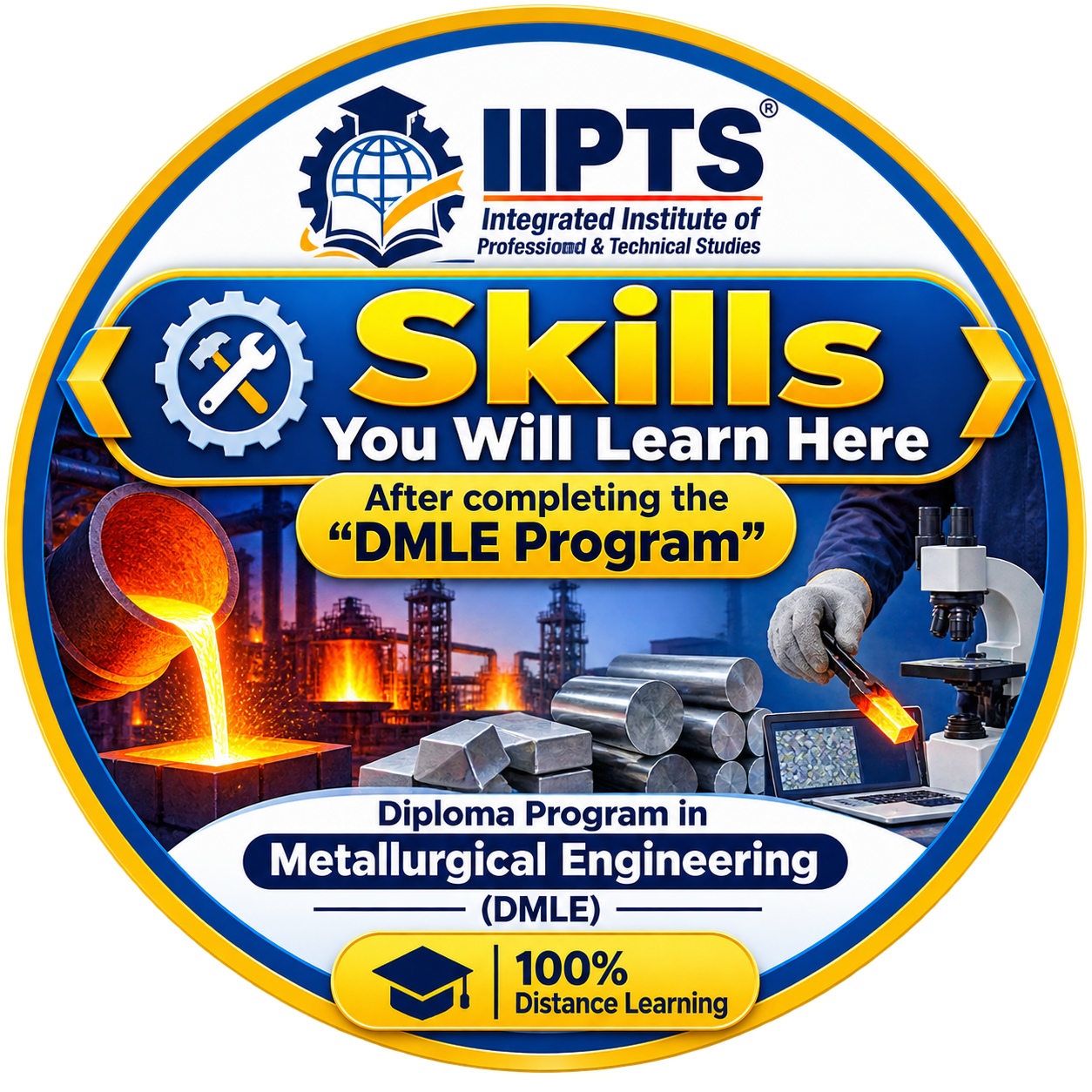
  • Metallurgical Fundamentals : Understand the basic principles of metallurgy, metals, alloys and engineering materials.
  • Material Identification & Selection : Understand material properties and basic material selection for engineering applications.
  • Physical Metallurgy : Learn about crystal structures, phase transformations, microstructure and material properties.
  • Mechanical Metallurgy : Understand strength, hardness, toughness, ductility, fatigue and other mechanical properties of materials.
  • Iron & Steel Metallurgy : Develop fundamental knowledge of iron production, steelmaking and different types of steels.
  • Non-Ferrous Metallurgy : Understand important non-ferrous metals and alloys such as aluminium, copper and their engineering applications.
  • Heat Treatment : Learn the principles of processes such as annealing, normalizing, hardening and tempering and their effect on material properties.
  • Foundry & Casting : Understand basic casting methods, moulding concepts, casting defects and quality considerations.
  • Corrosion Control : Learn the basic causes of corrosion and methods used for corrosion prevention and protection.
  • Material Testing & Quality Control : Understand fundamental material testing, inspection and quality-control concepts used in manufacturing industries.
  • Industrial Safety : Develop awareness of workplace safety, process safety and safe practices in industrial environments.
  • Technical Problem : Solving : Develop analytical understanding for identifying material, production and quality-related problems.
  • Extractive Metallurgy : Understanding mineral processing, pyrometallurgy, hydrometallurgy, and electrometallurgy techniques.
  • Material Testing & Quality Control : Proficiency in analyzing mechanical properties, microstructures, and defect detection in metals.
  • Physical & Chemical Metallurgy : Mastery of phase diagrams, heat treatment processes, and alloy design.
  • Foundry & Casting Technology : Practical knowledge of mold design, casting defects, and metal pouring processes.
  • Corrosion Engineering : Identifying causes of material degradation and implementing effective preventive measures.
Certification Benefits from IIPTS – DMLE
  • Professional Diploma Qualification : Successfully completing the program provides a Diploma qualification in Metallurgical Engineering, subject to applicable IIPTS academic and certification requirements.
  • Technical Qualification Enhancement : Strengthen your academic and technical profile with structured learning in core Metallurgical Engineering subjects.
  • Career Profile Enhancement : Add a specialized Metallurgical Engineering qualification to your professional resume and academic profile.
  • Skill & Knowledge Development : Build knowledge in Metallurgy, Materials Science, Steel Making, Heat Treatment, Casting, Material Testing and Quality Control.
  • Career Advancement Support : The qualification may support professional development, career progression and skill enhancement for working professionals, subject to employer requirements.
  • Industry-Oriented Learning : Gain structured knowledge relevant to steel, manufacturing, automobile, foundry, forging and metal-processing industries.
  • Flexible Distance Learning : Pursue your Diploma through a flexible Distance Learning format while continuing your job or other professional commitments.
  • Online Academic Support : Access the applicable online facilities provided by IIPTS for study, examinations, results and student-related services.
  • Online Result & Verification Facility : IIPTS provides online facilities for checking results and student/credential verification, as applicable.
  • Foundation for Further Learning : Develop a stronger academic foundation for pursuing further technical education or specialized programs, subject to the eligibility criteria of the relevant institution.
Why Choose IIPTS for Diploma Program in Metallurgical Engineering (DMLE)?
  • Flexible Distance Learning : Study with flexibility without the need for regular campus attendance, making the program suitable for working professionals.
  • Designed for Working Professionals : Continue your education alongside your job, business or other professional commitments.
  • Career-Oriented Curriculum : Learn important areas of Metallurgical Engineering including metals, alloys, materials, processing, testing and quality control.
  • Structured 3-Year Program : A systematic year-wise curriculum designed to progress from engineering fundamentals to advanced metallurgical concepts.
  • Core Metallurgical Engineering Knowledge : Develop a strong foundation in Physical Metallurgy, Iron & Steel, Non-Ferrous Metallurgy, Heat Treatment and Extractive Metallurgy.
  • Industry-Relevant Subjects : Gain knowledge related to steel, manufacturing, foundry, casting, forging, automobile and metal-processing industries.
  • Materials Science & Testing Focus : Understand material properties, metallurgical analysis, destructive and non-destructive testing and quality practices.
  • Online Learning Facilities : Access applicable online facilities for study, examinations, results and other student services provided by IIPTS.
  • Student Support : Get academic and administrative assistance throughout your learning journey, subject to applicable institute facilities.
  • Comprehensive Study Resources : Learn through structured study materials and resources designed to support distance-learning students.
  • Technical Skill Enhancement : Strengthen your knowledge of metallurgy, material processing, heat treatment, casting, corrosion and quality management.
  • Professional Profile Enhancement : Add specialized Metallurgical Engineering education to your academic and professional profile.
  • Suitable for Diverse Learners : The program can be suitable for students, technicians, supervisors and working professionals seeking technical knowledge enhancement.
  • Convenient Learning Approach : The Distance Mode provides greater flexibility for learners managing employment, business or other responsibilities.
  • Foundation for Career & Further Learning : Develop a technical foundation that can support professional development and further learning, subject to applicable eligibility requirements.
Career Opportunities After Diploma in Metallurgical Engineering (DMLE)

A Diploma in Metallurgical Engineering can help learners build technical knowledge relevant to metals, materials, steel, manufacturing, foundry, forging, heat treatment, quality control and material testing. Career opportunities may vary depending on experience, employer requirements, location and additional qualifications.
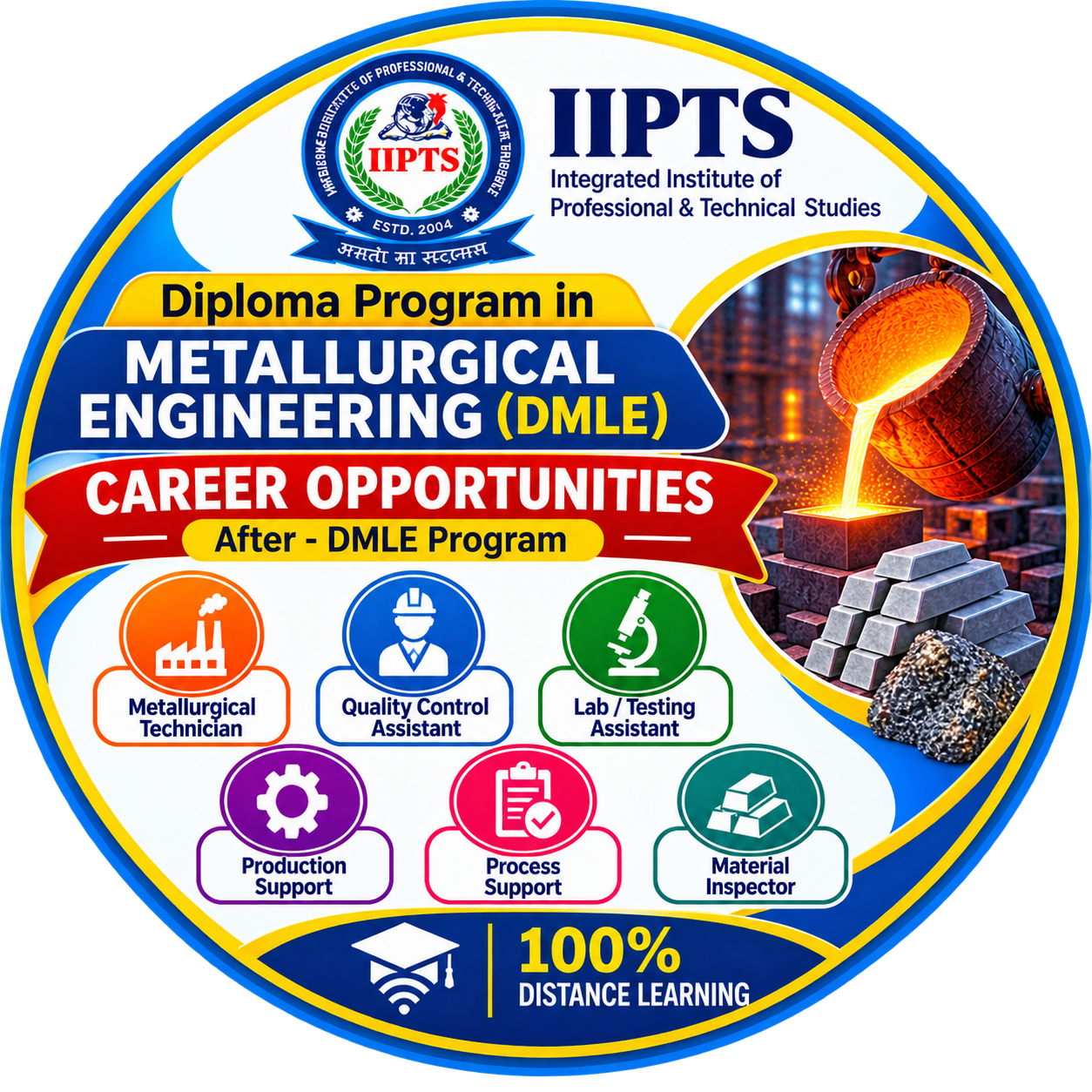
  • Metallurgy Technician : Support metallurgical processes, material inspection and production activities.
  • Metallurgical Technician : Assist with metallurgical operations, material processing and quality-related activities.
  • Quality Control Technician : Support inspection and quality control processes in manufacturing environments.
  • Quality Control Inspector : Inspect materials, components and products according to applicable quality requirements.
  • Material Testing Technician : Assist with testing and evaluation of engineering materials.
  • Metallurgical Laboratory Assistant : Support laboratory testing, sample preparation and material analysis.
  • Material Testing Assistant : Assist technical teams with material testing and documentation.
  • Production Technician : Support manufacturing and metal-processing production activities.
  • Production Quality Assistant : Assist production teams with quality inspection and process monitoring.
  • Foundry Technician : Support moulding, casting, melting and foundry production operations.
  • Foundry Supervisor : With relevant experience, professionals may progress toward supervisory responsibilities in foundry operations.
  • Heat Treatment Technician : Assist with heat treatment processes such as annealing, hardening, tempering and normalizing.
  • Metal Processing Technician : Work with processes involved in shaping and processing metals.
  • Iron & Steel Plant Technician : Support technical and production activities in iron and steel manufacturing facilities.
  • Non-Ferrous Metal Technician : Work with processing and production activities involving non-ferrous metals and alloys.
  • Inspection Technician : Assist with inspection, dimensional checks and quality documentation.
  • Corrosion Control Assistant : Support corrosion inspection, prevention and surface-protection activities.
  • Manufacturing Technician : Support technical and production operations in engineering and manufacturing units.
  • Forging Technician : Assist in metal forging, processing and production operations.
  • Material Inspection Technician : Support incoming material inspection and quality verification.
  • Quality Assurance Assistant : Assist quality teams with documentation, inspection and process-quality activities.
  • Metallurgical Process Assistant : Support metallurgical production processes and technical operations.
  • Heat Treatment Quality Technician : Assist in monitoring heat-treated components and related quality requirements.
  • Materials & Quality Laboratory Technician : Support laboratory-based material testing and quality-control activities.
  • Technical Production Supervisor : With suitable experience, professionals may progress toward supervisory roles in production and metal-processing operations.

Industries You Can Explore -

A DMLE qualification can be relevant to a wide range of industries, including : 

  • Iron & Steel Manufacturing
  • Steel Plants
  • Automobile Manufacturing
  • Foundry Industry
  • Forging Industry
  • Metal Processing Industry
  • Heavy Engineering
  • Engineering Manufacturing
  • Heat Treatment Plants
  • Non-Ferrous Metal Industries
  • Material Testing Laboratories
  • Quality Inspection & Testing
  • Manufacturing Industries
  • Construction Material Industry
  • Metal Fabrication & Processing
Expected Salary After Diploma in Metallurgical Engineering

Salary after completing a Metallurgical Engineering diploma can vary significantly according to job role, experience, location, industry, employer and technical skills.

For website communication, an indicative range can be presented as:

  • Fresher / Entry-Level : Rs. 15,000 – 30,000 per month
  • With 2–5 Years of Experience : Rs. 25,000 – 50,000 + per month
  • Experienced Technical Professionals : Rs. 40,000 – 70,000 + per month
  • Course Name:
    Diploma Program in Metallurgical Engineering
  • Course Code:
    DMLE
  • Duration:
    3 Year(s)
  • Course Type:
    Year
  • Eligibility:
    10th Pass Or Above
  • Course Fee:
    ₹ 46,000.00
  • Total Seats:
    30
  • Certificate:
    Yes

Course Curriculum

# Subject Name
01
Engineering Mathematics & Applied Science
02
Engineering Materials & Metallurgical Fundamentals
03
Engineering Drawing & Computer Graphics
04
Introduction to Materials Science
05
Manufacturing Fundamentals
# Subject Name
01
Physical Metallurgy & Crystal Structure
02
Iron & Steel Making Technology
03
Non-Ferrous Metallurgy & Alloys
04
Heat Treatment & Metal Processing
05
Foundry Technology & Casting Processes
# Subject Name
01
Principles of Extractive Metallurgy
02
Mechanical Metallurgy & Material Properties
03
Metallurgical Analysis & Testing
04
Corrosion Engineering & Surface Protection
05
Industrial Project & Quality Management